

From Selfridges’ globe-trotting spectacle to Fenwick’s storybook theatre and Fortnum & Mason’s domestic nostalgia, luxury department stores are showing why a physical Christmas window remains one of retail’s most powerful brand stages.
While it may seem that retailer’s marketing investment is being poured into social commerce, personalisation and shoppable video, the most effective Christmas campaign may still begin with a passer-by stopping on the pavement.
In 2026, luxury department stores are treating their windows not as decorative frames for merchandise, but as physical media: public, theatrical and designed to travel far beyond the street through photographs, video and word of mouth.
The approaches taken by Selfridges, Fenwick and Fortnum & Mason are notably different, yet each points to the same strategic truth. At Christmas, a window can turn a store into a destination, make brand values tangible and give shoppers an experience that cannot be replicated by a product grid.
Selfridges: making the flagship a portal
Selfridges has gone broad with “Christmas and the City”, transforming its stores into festive cityscapes inspired by destinations real and imagined.
At Oxford Street, 12 windows follow Santa around the world, moving from Parisian rooftops and a Milanese aperitivo bar to a Bangkok tuk-tuk, with New York, Tokyo, Rio de Janeiro, Lagos, London and Vice City also in the mix.
The concept does more than deliver scale. It gives the retailer a flexible narrative that can stretch across London, Birmingham and Manchester, as well as dining, entertainment, collaborations and online content.
Chief executive André Maeder describes the campaign as an invitation to create shared memories and make everyone feel welcome. That language matters: the windows position Selfridges as part of the energy of its cities, rather than simply a place selling into them.
Fenwick: turning a familiar story into an event
Fenwick’s Newcastle flagship takes a more intimate route by bringing The Gruffalo’s Child to life. Created with Macmillan Children’s Books and Magic Light Pictures, its animated woodland scenes use moving characters, intricate scenery, festive lighting and a soundtrack performed by the Royal Northern Sinfonia to retell the journey through the snowy forest.
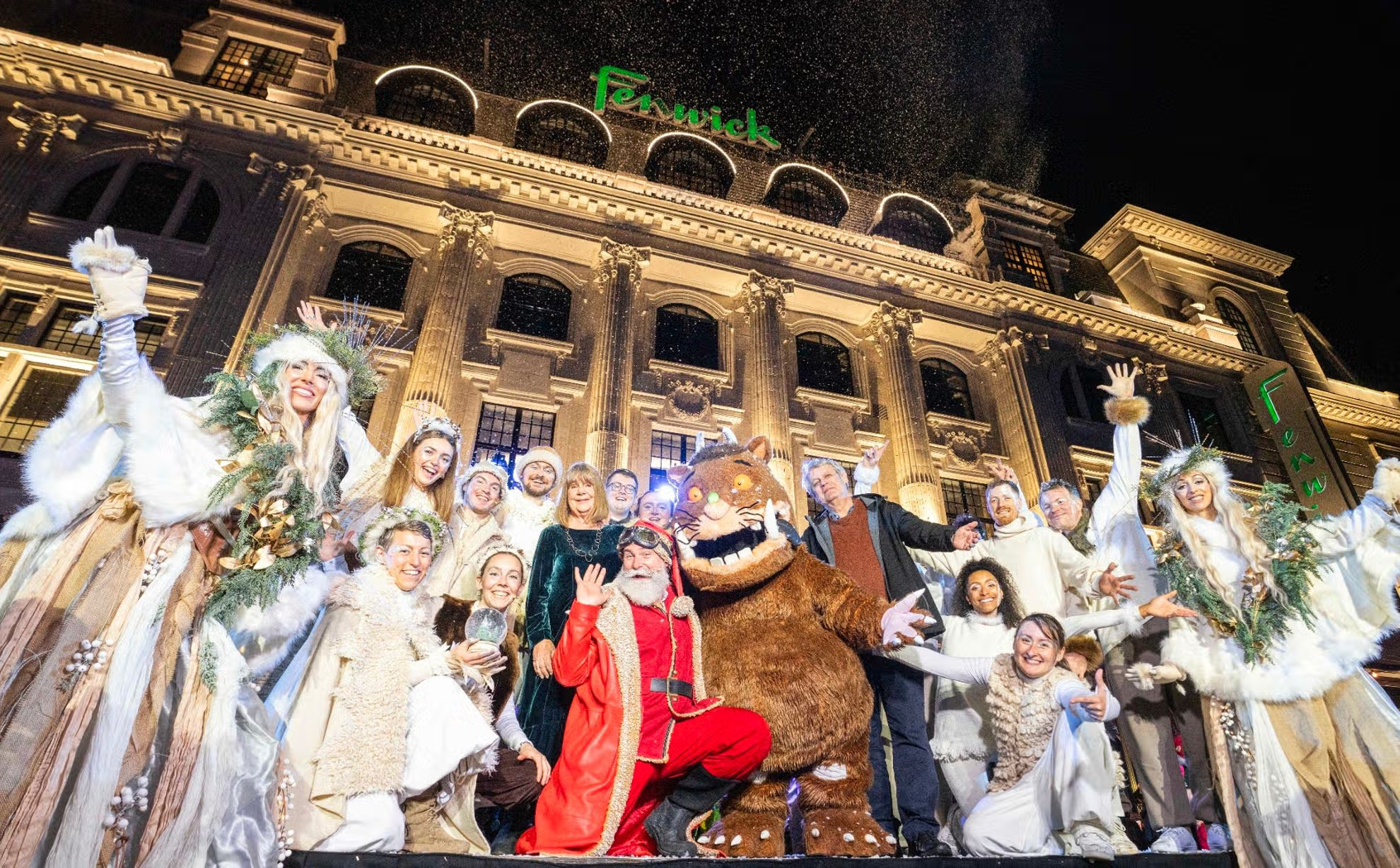
The reveal itself shows how a window can generate attention on several levels. Families from local schools, hospitals and charities attended on Northumberland Street, while thousands watched online.
Fenwick chief executive Mia Fenwick called the collaboration a “long-held ambition”, underlining the advantage of choosing intellectual property with deep emotional recognition. The installation offers children a story they know, adults a shared cultural reference and the city a seasonal ritual.
Fortnum & Mason: selling the feeling of home
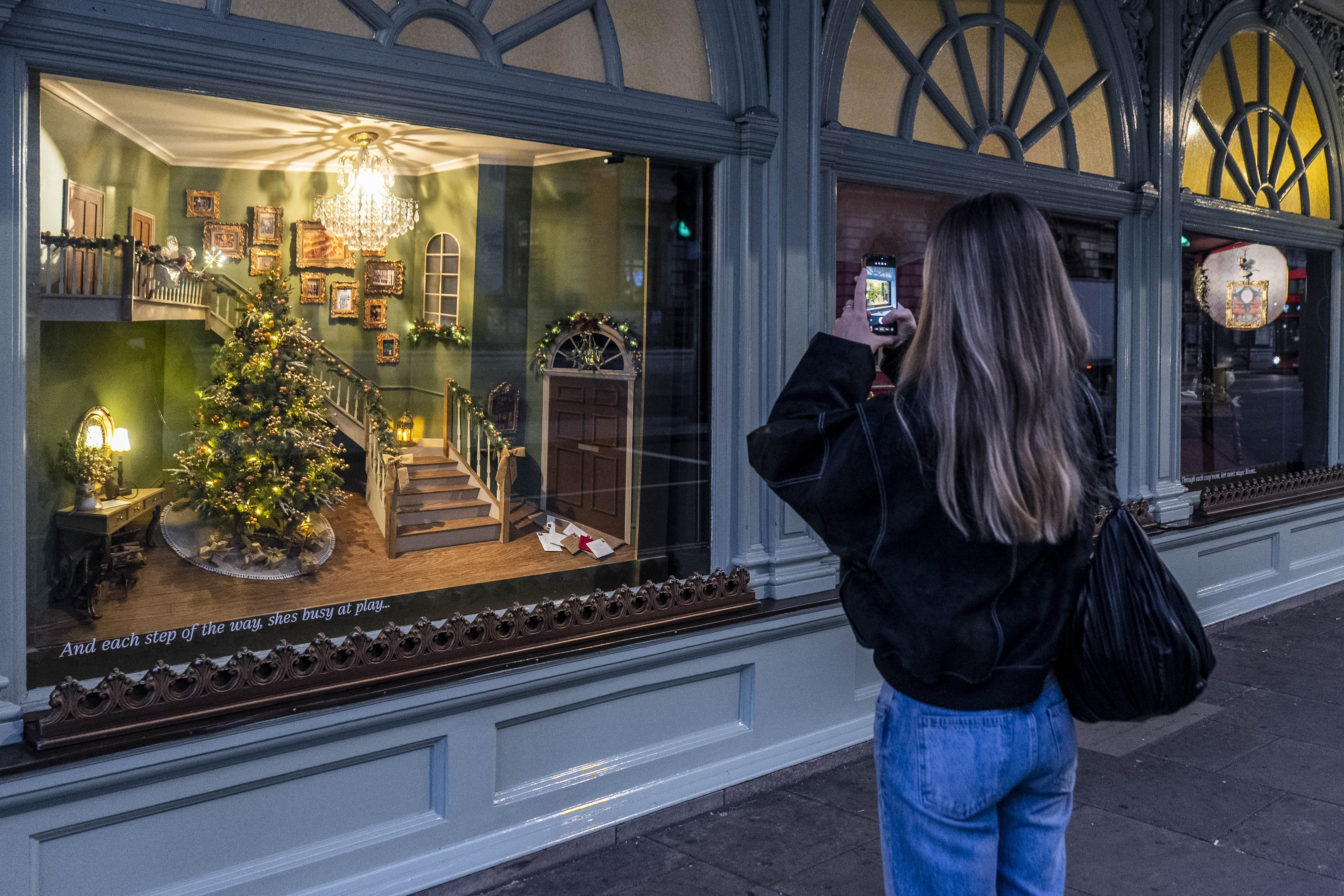
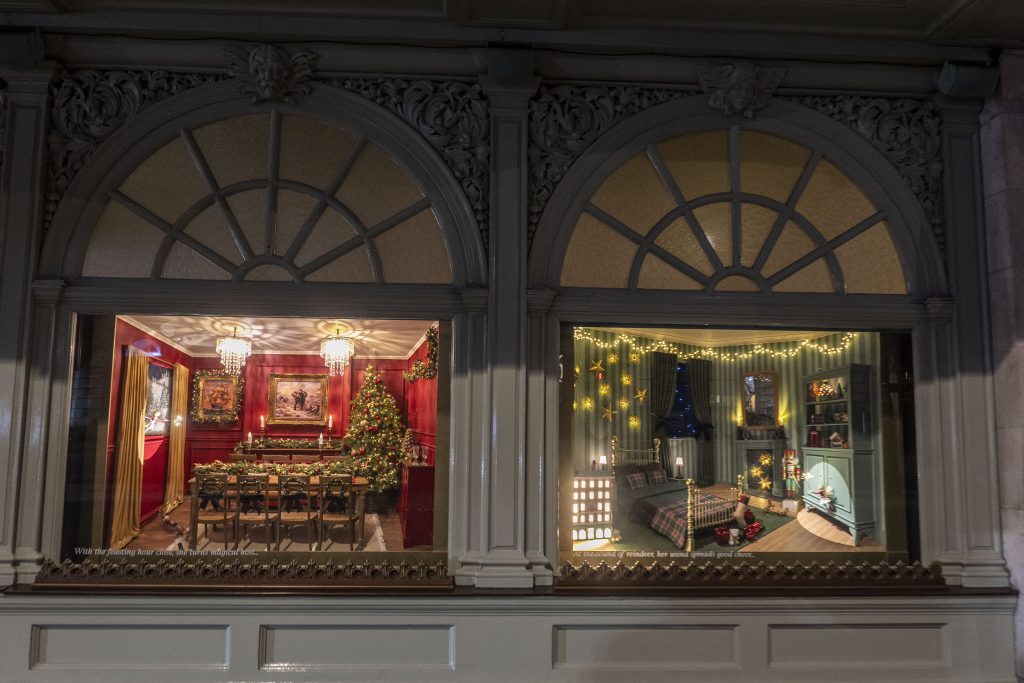
Fortnum & Mason, meanwhile, has built its Piccadilly windows around the nostalgia and traditions of Christmas at home. Seven scenes move through a festive house, from a hamper on the porch and preparations in the kitchen to a dining table set for Christmas dinner.
A fairy created by illustrator Olaf Hajek links the rooms, while Fortnum’s familiar mice play among bespoke furniture, packaging-inspired wallpaper, garlands and illuminated trees.
Where Selfridges offers escape and Fenwick adapts a beloved narrative, Fortnum’s makes recognition the attraction.
Head of visual presentation Sallie Smith says the intention was to bring back fond memories while inspiring new ones. The windows translate that promise into rooms, rituals and small details, giving the retailer’s products a place within an idealised Christmas rather than presenting them as isolated gifts.
Physical theatre, digital reach
These campaigns work because physical display and digital distribution are no longer opposites. A window must reward the person standing in front of it, but it also needs a clear visual idea that survives on a phone screen.
Movement, recognisable characters and richly art-directed scenes provide the raw material for launch films, social posts and customer-made content. The street supplies credibility; digital channels supply reach.
The commercial effect is not always captured by a direct line from window view to till receipt. Its value is broader: it increases dwell time, creates a reason to visit, anchors a wider campaign and reinforces what the brand wants to mean at the most competitive moment of the retail calendar. A memorable window can also become part of the city’s own Christmas imagery, earning attention that paid media would struggle to imitate.
The lesson for Christmas 2026
The strongest 2026 displays do not rely on spectacle alone. Each starts with a distinct brand idea: cosmopolitan discovery at Selfridges, intergenerational storytelling at Fenwick and cultivated domestic tradition at Fortnum & Mason. The craft serves that idea, and the wider campaign amplifies it.
That is the enduring power of the Christmas window. It occupies scarce, visible space in the real world; it asks shoppers to pause without requiring them to click; and, at its best, it turns a retailer’s identity into a scene people want to remember. In an increasingly frictionless shopping journey, that moment of friction may be precisely the point.
Click here to sign up to Retail Gazette‘s free daily email newsletter